
Parenting a Child with a Disability: Choosing Stories
Posted: February 4, 2014 Filed under: advocacy, being Korean, disability, Down syndrome, parenting | Tags: disability, Down syndrome, humor, Parenting 57 CommentsMy parents did some messed up stuff to me. In fact, any people who try to say that their parents didn’t mess up in some way or another are highly suspect in my book.
 Some of my moments were funny, like the North Korean dictator picture that my mom got of me when I was 100 days old. Since living 100 days most likely meant that a baby was healthy enough to survive, it is a very important mark in a Korean baby’s life. Parents have celebrations, take pictures. There’s a lot of rice cake involved. Why my mom thought it would be a good idea to dress me in blue, sit me on a red and gold throne, and forever preserve the vision of me looking like a communist dictator, I’ll never know. (Don’t get me wrong, I dislike the pinkification of girls nowadays, but in my particular situation, I don’t think the blue outfit helped me look less of a middle-aged dictator, that’s all.) I asked her once, why it had never occurred to her to dress me in something different, maybe do something to my hair that didn’t make it look like a mash-up of an Asian Flock of Seagulls and a Wikipedia entry on “Male Pattern Balding.” Her response was simply wave her hand at me and laugh. Pshaw. I was so cuuuute! Silly me.
Now, that dictator picture will forever be a part of my history.
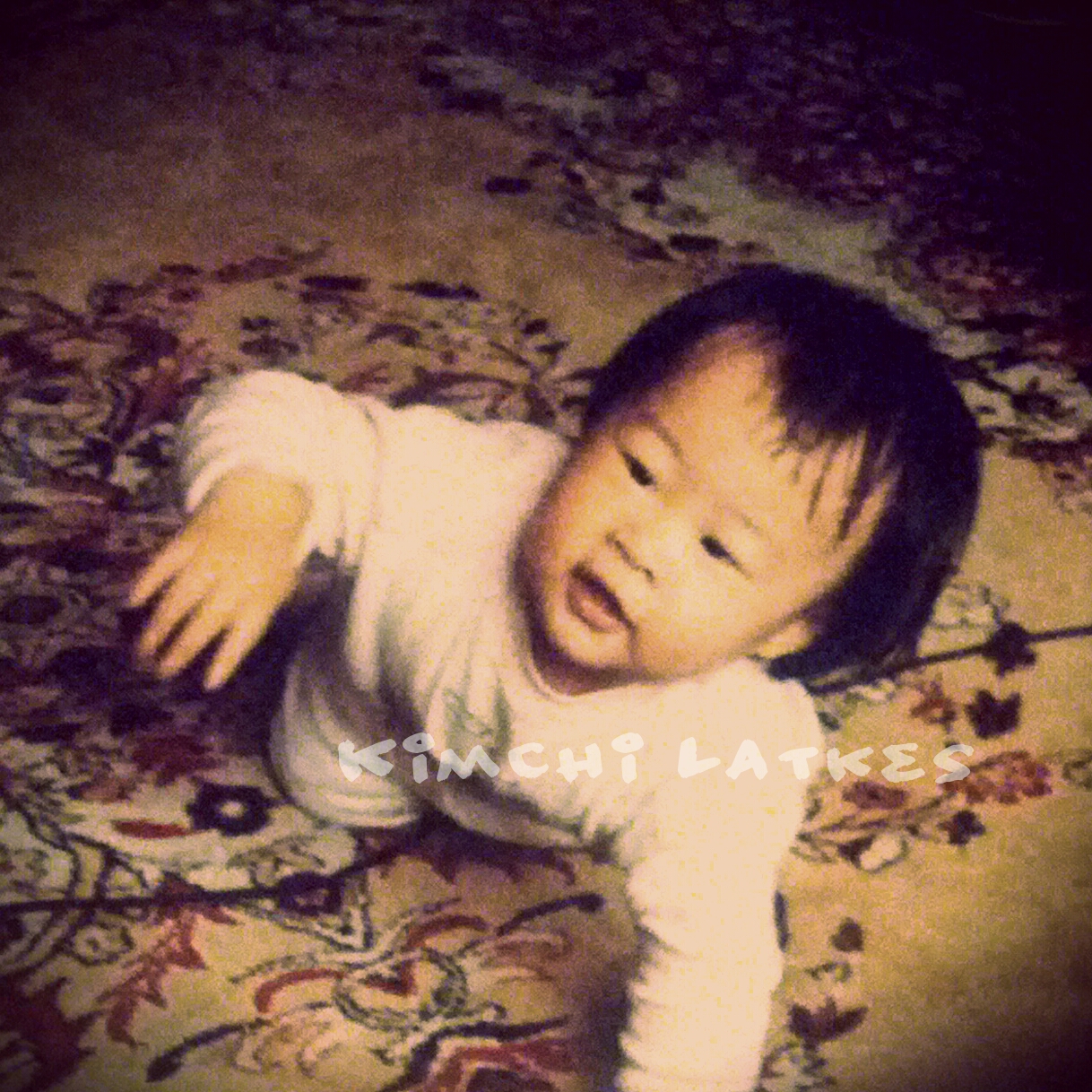 The thing is, as I got older, their history didn’t always match up with mine. I remember ordering something unexpected off of a restaurant menu and my parents exclaiming, “But you don’t like eating that.” I remember wanting different styles of clothes and hearing my mom say, “But that isn’t you.” There was also the more complex narration of my life, like what it meant to be Korean, a woman, an immigrant, accepting the death of my baby sister. Much of this narration was lovely and empowering. But I’ll be honest—some things, in hindsight, were less so.
I’d had absolutely no say in my beginnings. How could I? I had no conscious decision-making hand in how loud I cried, how chubby or skinny I was, my sleeping habits, my baby temperament. I have no memory of my first words. I don’t recall my favorite food, or how much I loved strawberries, or that time I had to go to the hospital and get IV fluids.
Now, as an adult with my own family, I understand that there are times when my parents look at me and wonder who I am. My story has veered off into places they never expected. When we planned on having my baby at home. Yes, without a doctor, mom. When I told them that we would be pulling Mouse out of school to homeschool her. Yes, mom, without teachers. Not at school. No, I’m not planning on enrolling her in a different school. No, mom, not any school. My broader beliefs have made unexpected turns as well, like the fact that I’ve retained a belief in God, yet left Catholicism. Or my views on race, class, gender, and more recently, disability. I doubt that in the early years of raising me, they could have predicted the trajectory of my life and beliefs.
I know that part of them scratched their heads in confusion. Where did our little girl go? This isn’t the way we raised her.
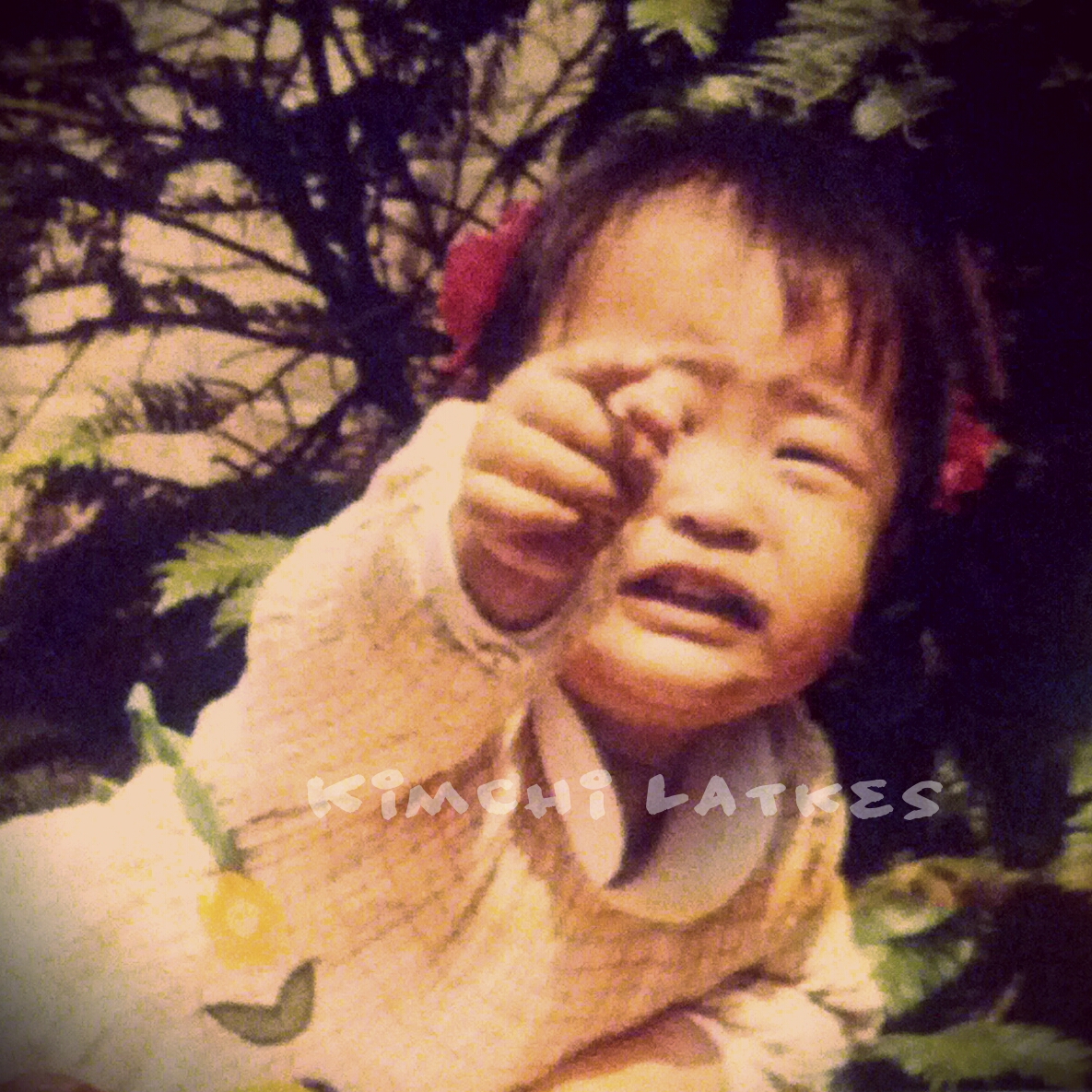 Still, I’ve come to recognize that we—my parents and I—live a duality in which they know me better than I know myself, yet at the same time don’t know me at all. They know parts of me that I’ll never know except through intuition. I can’t put words to who I was in the early years of my life. What’s more, they actively shaped who I was in those early years. Back then, I didn’t have the communication skills and maturity that I have now, but they did. So they lent themselves to me. They were simultaneously conductor and amplifier.
Somewhere in the plot line, I looked at the values they’d given me, the stories they’d created around me, and knew that none of it was wholly mine. And what I wanted then was a self that was completely, wholly, utterly mine.
I’ve contemplated many times what it means to raise a child with a disability. I will never fully understand what it is like to have Down syndrome. As I write about my son, I am acutely aware of the fact that I’m constructing a story that he’ll later have the choice to dismantle in place of his own.
When I look at a lot of what causes strife in the Down syndrome community, much of it centers around these narratives that parents choose for their children.
Is Down syndrome natural, or an error that would ideally be fixed? God gave me this child for a purpose… My child inspires me to be [insert positive adjective here], why shouldn’t others be equally inspired by our lives? I grieve for the child I didn’t have… There are so many bad images out there, let’s create some positive ones… Having a child with a disability is hard/sad/scary, and I am entitled to be honest about that…
What I try to keep first in my mind is an awareness that with every word and picture I make public about my children, I’m creating a story in which they have no say. I try to be very careful balancing what I think are my needs and theirs. There are times when my story will line up with their stories, but I try to be respectful of when it might not.
 The reason I am not interested in “curing” Down syndrome is because I could never look him in the eye and tell him that I wished him to be fundamentally different. While I understand that many people believe that God works through all of us, I can’t say that having a child with Down syndrome is a gift from God, because I don’t want to single out one of my children to have a greater spiritual burden than my others. My child might inspire me, but he might grow up and resent being the object of inspiration for perfect strangers. I might have all kinds of feelings about what might have been or should have been, but I owe it to my children to work out the bulk of those feelings without involving them directly, because right now, they are whole, human beings and there simply is no might have or should have; there is only what is. The stuff that is hard? I’ve got to explore the possibility that I’d find any situation hard, and that has more to do with how I cope with stress and adversity than anything to do with my child or his diagnosis. Above all, I’ve got to own what’s mine and respect what should be theirs.
Where to draw the line? What if I draw it wrong? LP may grow up and want a cure for T21. He might believe that he is God’s tool on this earth, sent to inspire others. He might wonder about a life with only 46 chromosomes. Heck, he might be annoyed that I spent so much time writing about his chromosomes at all. What’s certain is that his story, like all my children’s stories, will twist and turn in ways that I could never have predicted.
If—when—he does tell his own story, I’m sure he’ll look back at what I have told and tell me that some of it was wrong. I’m ok with that. I want that. I have no doubts that I’ll mess up, but I’m trying my best. I’m sure that I already have. Messing up is natural in every parent-child relationship. It is how we deal with that gap, the space between our stories, that matters most. I hope when the time comes, I’ll have the grace to sit down and listen, as my parents have tried so hard to do for me.
I didn’t bring them into the world for their lives to be about me, after all. Fundamentally, I see my job as a parent as a duty to clear the way for my children to tell their stories.
Dear Mama: The Good and the Bad
Posted: January 27, 2014 Filed under: Dear Mama | Tags: attachment parenting, Down syndrome, Parenting, siblings, sleep through the night 23 CommentsDear Mama,
Yes, LP here. I think it is really sort of unfair that I’m completely dependent on you to write my letters for me. I mean, you’re writing a letter to yourself, from me, but you’re not me. Does that strike you as problematic? Just sayin’.
The good stuff or the bad stuff first? Good stuff? Ok.

I mean, how cute are we??? Nevermind that we ate those crackers on your bed while you were in the bathroom. Just remember, enjoy the cuteness.
You’re doing alright. As in, I know that you spend a lot of time worrying about us, and thinking about our futures, but try not to go too far. Because let’s be real here—we’re not likely to appreciate all the stuff you do for us until maybe twenty years from now. And that is being optimistic. You’re in it for the long game, mama. Before long, my sissies and I will be self-centered, hormonal, young people who are too busy figuring out their own crap to stop and appreciate what went into getting us there. Plus, some of the crap we’ll be busy trying to figure out will be from you (just being real again). Seriously, it’ll all work out, promise.
How do I know that we’ll become too busy to notice you? Because look at Mouse and Chipmunk, they’ve already started! They’re too busy in their imaginary lands and dealing with their dramas to even notice you lately! They notice me puuulenty though. Have you seen how often I have to play the evil pirate, or they end up making me into the pet dog/cat/rabbit? It’s just not dignified.

Don’t make me do this again. Seriously.
Another good thing, life seems good right now. You’re not taking me to any more sleep studies, because my sleep apnea is now mild (I told you so). The whole homeschooling thing is looking good. I can tell you and dad are dreaming and talking about the future, and that looks good too. Mouse and Chipmunk are awesome (let’s just pretend that this is more often than not for the sake of this cute letter). Me? I won’t brag here, but let’s just say that I’m on top of things. That poop? It gets pooped. That box of stuff? It gets emptied. That silence? It gets filled with yelling sweet babbles. All thanks to yours truly. You’re very welcome, mama, it is really good to know that all my hard work doesn’t go unnoticed!
Ok. Now. I’ve got some, um… constructive feedback for you. This bed/sleep situation. Come on. That bed has no boobs, no cuddles, no parents to kick in my sleep, no sleeping noses to pick when I wake up. WTF, right? Why would I want to sleep in there? What’s worse, you put me in those sleep sack thingies, and they get all twisted up while I’m rolling around yelling my head off for you to let me into your bed. Look. You and dad are sleeping on that nice memory foam pad, with the down comforter, and all you give me is a sleep sack??? I already gave up most of my nursing at night. I object.
I know that I slept through the night at two months, blah blah blah. Let’s remember, though, that my thyroid didn’t work so well back then. I mean, I’m just trying to recapture the quintessential baby experience. Yelling, and seeing the horrified look on your tired face as you come and bring me to your soft, warm, wonderful bed. Listening to you and dad argue in the middle of the night about what to do about me. Sitting triumphantly on your head with a dirty diaper, each morning I manage to wheedle my way into bed with you. Are you truly going to deny me this? What kind of mother are you?
Ok, sorry. Maybe that went a little too far. Just ride it out, ok? I’ll probably get over it. Like in a couple of years. Maybe five. Ten, maaax.
Let’s talk about that therapist. I know she comes over to watch me do stuff. I know y’all have discussed me crawling differently. Something about crawling and brain development. Check it—there is no way you’re going to get me to do something I don’t want to do! Just because I have this sweet disposition doesn’t mean that I won’t put my foot down. And it is down, mama. I will play with her awesome toys. I will “talk” to her. I will even let her hold me, because I happen to like her. I might even high five her every now and then. That’s it, though. I crawl the way I do because it works, dagnabbit.
Last but not least, let’s talk about baths. I. Will. Never. Like. Baths.
Nevah evah.
I know you think I’ll get used to them because all my baby friends have. When I’m a teenager and I’m begging you for some expensive gadget because all my friends have them I’m pretty sure you’ll say something about me not being the same as my friends. Yup. Touche. You’d think that because I was born in the caul, I’d have some kind of affinity for water. Yeah, I know, that confuses me too. I have no explanation; I am what I am.

Just a cute picture of me in a box. Notice, I look happy, and I’m not in a bath.
So, mama, that is my letter to you. A wee snapshot of what life is like in my brain after 14 months of life. Except it is your brain. Pretending to be my brain. You really should think about that stuff I said in the first paragraph. Mwah.
Love,
LP
Ordinary Choices
Posted: January 18, 2014 Filed under: Down syndrome, parenting, the future | Tags: Down syndrome, Mountain View Cemetery, Parenting, teenagers 18 CommentsI live a pretty ordinary life. I’m married with three kids, have a mortgage, a car payment, and random aches and pains (perhaps from having three kids in five years). Boooring, in fact.
A couple of days ago I found myself in the car with a sleeping baby and an hour to kill, so I went for a drive. There’s a cemetery in the middle of the city. I like driving up the hills and trying to absorb the view through osmosis, in hopes that I’ll leave a little calmer and wiser.
I watched the sunset for a few minutes before I realized I’d happened upon a flock of teenagers. It was that late afternoon witching hour filled with supposed boredom and an inexhaustible need for togetherness. I watched them sitting on the hoods of their cars, making fun of each other, laughing, and I felt an actual ache in my chest. So ordinary and unremarkable, yet I found myself unable to think of anything else.
I admit that I indulged in some cheesy thoughts about bright futures, dreams, and an oyster analogy.
There was one girl among maybe ten boys, and so of course I imagined one of my girls being her. It came fairly easily. Maybe she was that girl who seemed happier making friends with boys. Maybe she was someone’s girlfriend or sister. At any rate, I mentally time travelled ten years to plop Mouse or Chipmunk in there to see how it felt. Truthfully, the thought kind of disappointed me. It seemed so vanilla. If I’m honest, I have vague notions of the girls growing up doing something other than just wiling away hours with boys playing hacky sack in some cemetery. The moment I thought it, I realized how silly it was to set up vague expectations like that for your children.
Then I tried to imagine LP being one of those boys and I paused. It wasn’t so easy. The idea of him going to meet a crew of friends, maybe with his girlfriend, and kicking a hacky sack around did not seem ordinary at all. Then I felt a second ache in my chest.
Now don’t get confused. I wasn’t feeling that ache because I think there is something about LP himself that precludes him from partaking in that ordinary teenage moment.
What hurts my heart is the idea that the rest of the world might never allow him, a person with Down syndrome, to experience such ordinariness. Here I am worrying about whether my daughters will be ordinary—as if that were something intrinsically bad—while my son may struggle for that choice. I’m fully aware of what parents of pre-teens and teenagers (with Down syndrome) say; I know it is likely that social inclusion will get more difficult. Withheld, even. I can see how it becomes harder to fight the tide, especially if institutions or other parents don’t see eye to eye on what is right.
What should I do, then?
I’m trying to remember that looking ordinary has very little bearing on a person’s real life. Being ordinary is more often than not a façade, after all. We are all different and extraordinary in some way or another. Plus, LP might not want what I saw in the cemetery that day. Still, I do think that some people are afforded the privilege of taking their differences out when they want, while others are involuntarily branded by it.
I don’t have a fix. I want all three of my children to have choices. Plain, old, ordinary choices. Choices between which friend to hang with. Choices between who to date. Choices between places to go. Later on, I might even want them to have fair choices in employment, living arrangements, finances. Is that asking for too much?


 Kimchi Latkes